
Soil is the most important part of a plant, or tree. It provides all living object to a plant from birth to dead. It is a mixture of organic matter, minerals, gases, water, and organisms that together support the life of plants and soil organisms. Healthy soil full with sustainable management practices like organic matter addition, crop rotation, and reduced tillage essential for maximizing crop yields.
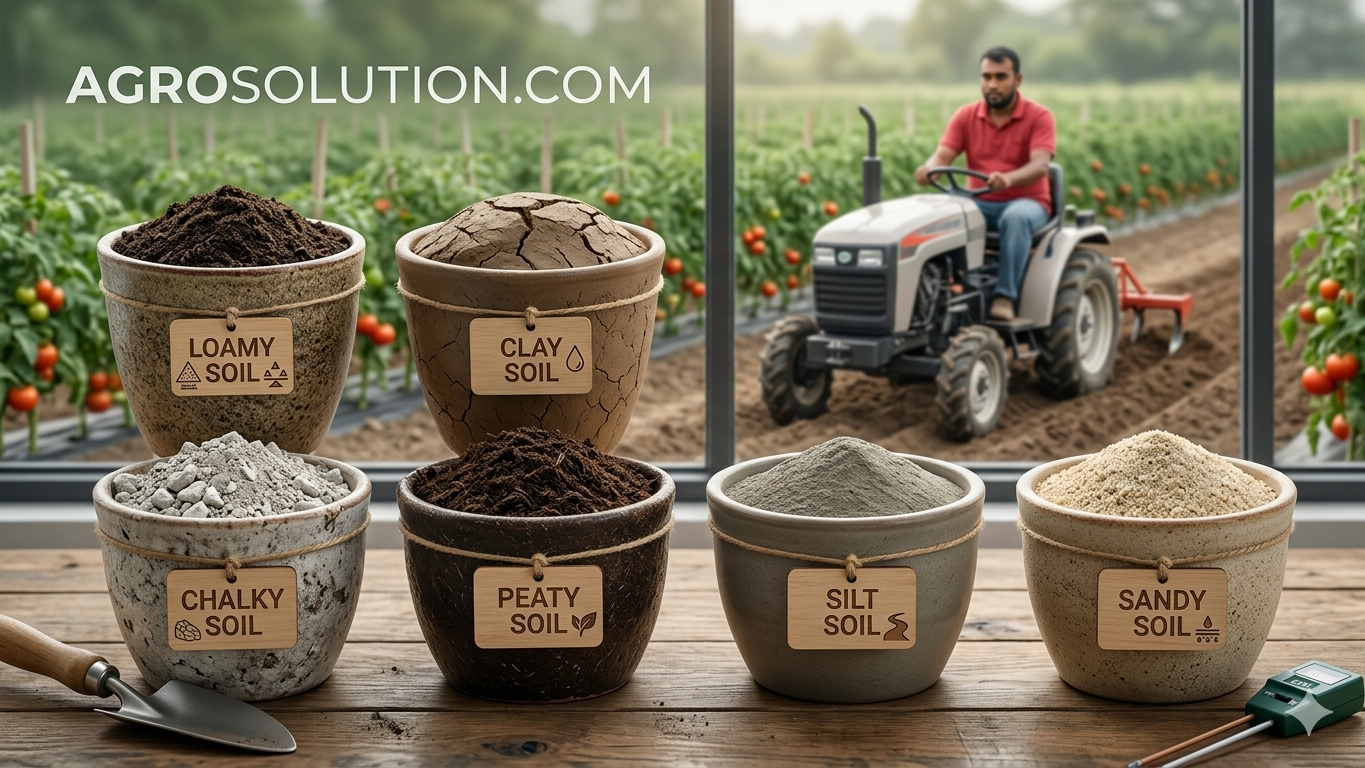
If you want success of farming even before the first seed touches the ground, You need to chose the right soil for your specific farming. In farming, soil is not just “dirt or a component it is the base that nourishes life both plant and animal. Every crop that you want to grow like, from grains to fruits, from flowers to vegetables, grows only because the soil allows it to. But soil is not the same in everywhere it differ from farms, regions, and even different corners of the same land. And each soil behaves differently with the plants and animal which is grown or depend on it.
So, when you want to start farming you first need to choose the land very carefully. No matter how dreamy it looks, if you want to invest seriously, you have to look at the soil which must be healthy and have full sunlight for all day long. Especially if you want to lease land for cultivation or start farming you must know the soil properly. In this case the types of soil in agricultural farming becomes very important. It helps you decide two important things:
- What crops you can grow well in your land?
- What improvements or treatments might the soil need for your specific crops?
In such problem our team provides you the solution of you agro problem, we’ll break down the different types of soil for farming, understand their characteristics, and explore which soil is best for your farming based on the crop you want to grow. So after completing this article, we expect that you will be able to identify the best soil for your farm, how to test the soil, and why farmers often focus on balance rather than one single soil type.
The Different Types of Soil for Agriculture (and Their Characteristics)
Soil is not a single things or material it is a mixture of various things, material or components. Soil is a complex three-state system of solids, liquids, and gases. Soil variety depends on the proportion of sand, silt, clay and amount of water found in it. This exact composition is greatly affects by drainage, nutrient retention, fertility, and how roots grow.
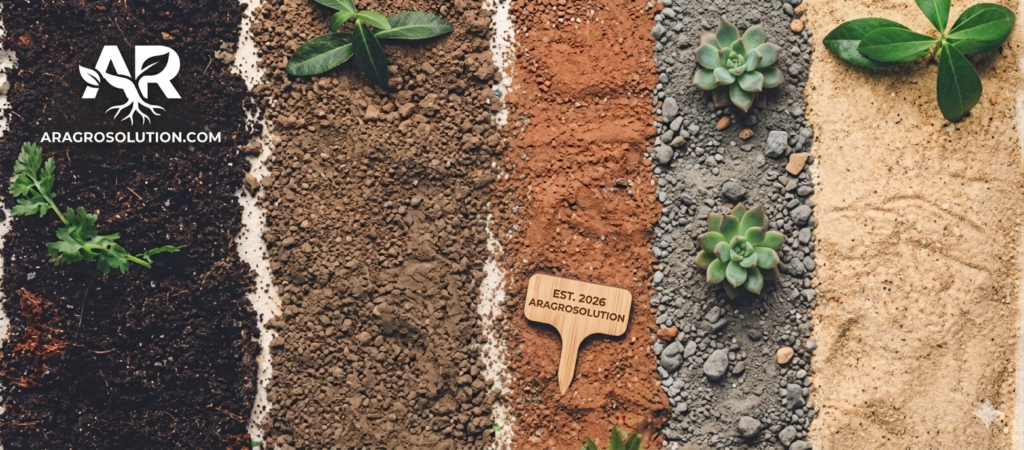
Here are the most common types of soil for Farming :
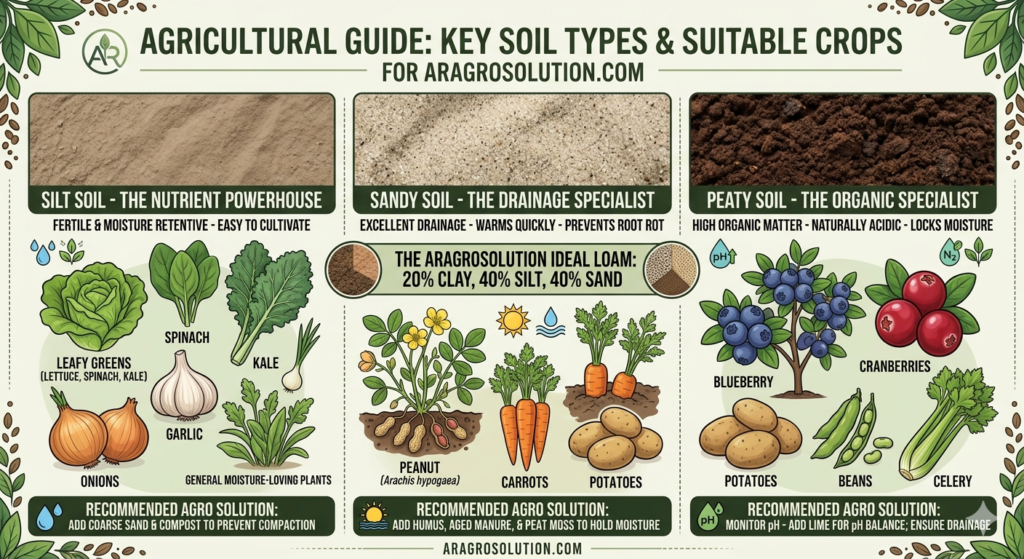
1. Sandy Soil
This type of soil consists of maximum sand and other element is lower. For this soil farming experience can be a bit tricky because water holding capacity of this soil is very low. The water slips away fast and pulls the nutrients along with it that’s why plants can not get enough nutrient. The good thing is that sandy soil warms up quickly, so it’s perfect for crops that does not need mush water, such as root vegetables like carrots, radishes, potatoes, leafy greens like lettuce, collard greens, and heat-loving crops like tomatoes, watermelons, melons, and cucumbers, peanuts, and coconut.
Its characteristics are:
- Large particles
- Drains very quickly
- Doesn’t hold nutrients for long
- Sandy in nature
- Low capacity of holding water
2. Clay Soil
If you plant a tree or crops that need so much water you can select this type soil. Because it is heavy and compact, and hold too much water can even suffocate the tops. But if you managed drainage system perfectly, then it will be the ideal soil for your farming because it’s so rich in nutrients. You can grow many other crops like Rice, Broccoli, Cabbage, Wheat, Squash, Pumpkins, Beetroot, Lettuce, Swiss chard, Brussels sprouts, Kale, Cauliflower, Snap beans, Tomatoes, and certain fruit trees.
Its characteristics are:
- Very fine particles
- Holds water for a long time
- High nutrient-holding capacity
- Sticky when dry
3. Silt Soil
Silt soil is widely use in farming because of its high fertility, fine-grained soil composed of rock and mineral particles which is smaller than sand but larger than clay. It is good for farming because of its excellent water retention, smooth and powdery texture with high nutrient levels. Though it is excellent for agriculture, but it is prone to compaction and erosion. It is a comfortable middle ground, as it responds very well to organic matter with enough water. You can grow so many crops with this soil like Wheat, Barley, Oats, Rye, Corn, Tomatoes, Onions, Garlic, Lettuce, Spinach, Kale, Carrots, Beets, Radishes, Turnips, Okra and even ornamental flowers.
Key Crops & Plants for Silt Soil:
- Cereals and Grains: Wheat, barley, oats, rye, and corn.
- Vegetables: Leafy greens like lettuce, spinach, kale.
- Root crops : Carrots, Beets, Radishes, Turnips.
- Forage Crops: Alfalfa, clover, and Rhodes grass.
- Trees/Shrubs: Willows, birch, river birch, red twig dogwood, and bald cypress.
- Perennials: Hostas, astilbe, ligularia, and ferns.
Characteristics Slit Soil:
- Smooth, slippery, or soapy when wet.
- Doesn’t drain too slowly
- Dusty and Floury when dry
- Susceptible to waterlogging
- High in mineral nutrients
4. Loamy Soil
Among all the type of soil Loamy soil is the ideal of all because of its fertility, and nutrient-rich soil type for gardening and agriculture. It is composed of a balanced mixture of sand which is approx. 40%, silt which is approx. 40%, and clay which is approx. 20%. For perfect farming it provides excellent aeration, moisture retention, and drainage, allowing plant roots to breathe and thrive.
Components of Loamy Soil
Sand: In loamy soil approx. 40% is sand which is provides large pore spaces for air circulation and easy root penetration.
Silt: In loamy soil approx. 40% is slit that’s why it holds moisture and nutrients, providing a medium texture.
Clay: In loamy soil approx. 20% is clay that retains nutrients and water, but in lower, non-compacting amounts compared to clay soil.
Organic Matter: This is widely known as Humus. And it is built form the dead body of plant and animal. And it greatly help to improves soil structure and fertility.
Key Characteristics and Benefits:
- Optimal Texture: For identifying Loamy soil it feels soft and crumbly, forming a loose ball when squeezed that breaks apart easily.
- Balanced Moisture & Air: Loamy soil hold enough water to prevent drought stress, but allows excess moisture to drain, preventing root rot which is very important for plants.
- Nutrient-Rich: This type of soil is full with high organic matter content which makes it highly fertile for plants.
- Ideal for Agriculture: This type of soil is mostly known as “agricultural soil” because it supports a wide variety of plants by providing all the necessary element dose a plant need.
5. Peaty Soil
Peaty soil is organic-rich soil formed from partially decayed plant material in waterlogged. It is dark and acidic conditions. Main features of this soil is loose, spongy texture with high water retention, but it is low in nutrients. It often requires amendments like sand or lime to improve fertility and drainage for gardening, farming or agricultural project.
Key Characteristics
- Composition: Contains high levels of organic matter like humus and this percentage approximately 20% to 75%.
- Appearance: Dark brown to black, often having a spongy, loose and fibrous texture.
- pH Level: Highly acidic which is often <7, sometimes <4.
- Water Management: It is excellent at holding water and retaining moisture but prone to waterlogging, so you need good water and drainage management.
- Nutrients: Typically low in nutrients, and acidic feature making it less fertile despite its rich appearance.
Commonly Grown Crops in Peaty Soil
- Root Crops: Potatoes, carrots, sugar beet, celery, and onions often thrive in you farm if you have well-drained peat.
- Vegetables: Brassicas like cabbage, broccoli, legumes like peas, beans, and lettuce.
- Fruits/Berries: Blueberries and cranberries, which thrive in acidic, nutrient-poor conditions, are well-suited to peat soil.
- Cereals/Fodder: Reed canary grass, sedges, and willow.
Key Management Considerations
- Drainage: In spring due to its waterlogged nature Peat soil often requires substantial drainage improvements .
- pH Management: Due to acidic condition in your farming liming may be necessary for certain vegetables to thrive.
- Fertilization: You need proper fertilization of Peaty soil because it often low in plant-available nutrients like potassium and phosphorus.
- Uses: Peaty soil is also used for specific ornamental plants, including Japanese Maples and Hostas.
6. Chalky Soil
Chalky soil is not naturally the best soil for agriculture it is a light-colored, stony, and highly alkaline soil. Chalk is the general name of calcium carbonate. If you want to work around it you need regular composting, mineral adjustments. The main feature of this soil is it drains quickly, rarely waterlogs, and warms up fast in spring. But it is nutrient-poor, prone to summer droughts, and often causes iron deficiency in plants, leading to yellowing leaves.
Key Characteristics
- pH: High alkalinity pH level is greater than 7.
- Appearance: Light-colored with white or light brown, hard in nature and often containing visible stones or rocks.
- Texture: Coarse, stony, and free-draining.
- Nutrients: Typically low in fertility and lacking key nutrients like iron and manganese.
Managing and Improving Chalky Soil
- Add Organic Matter: Incorporate large amounts of compost, manure, or bark to improve moisture retention and nutrient levels.
- Fertilize: Use acidic fertilizers to combat the high pH.
- Choose Right Plants: Select plants that thrive in alkaline, dry conditions, such as Lavender, Clematis, Mediterranean herbs, and many trees/shrubs.
- Mulch: Apply thick layers of mulch to help the soil retain water during dry summers.
Pros and Cons
Pros: Easy to cultivate fast warming in spring, excellent drainage.
Cons: Drought-prone, nutrient-deficient, potential for yellowing plants which is known as chlorosis.
Final Thoughts
When you start farming and you tries to understand what are the different types of soil, the goal is never just to identify soil. Your real intention behind it is to grow crops successfully right on your farm. And we try to said that, soil is not magic, and there is no magical potion to give your roots and crops the best nutrition you need to identify, chose and make the proper for your farming. You need to understand successful farming lies in:
- Choosing the right crop
- Testing the soil regularly
- Preparing the soil perfectly
- Use proper fertilizer
- Right use of pesticide
- Improving soil structure year after year
No land has perfect soil so, instead of chasing the “perfect land,” you should keep your focus on soil knowledge + soil management. That is the mindset that will help you build a sustainable and productive farm that performs and serves you for decades.
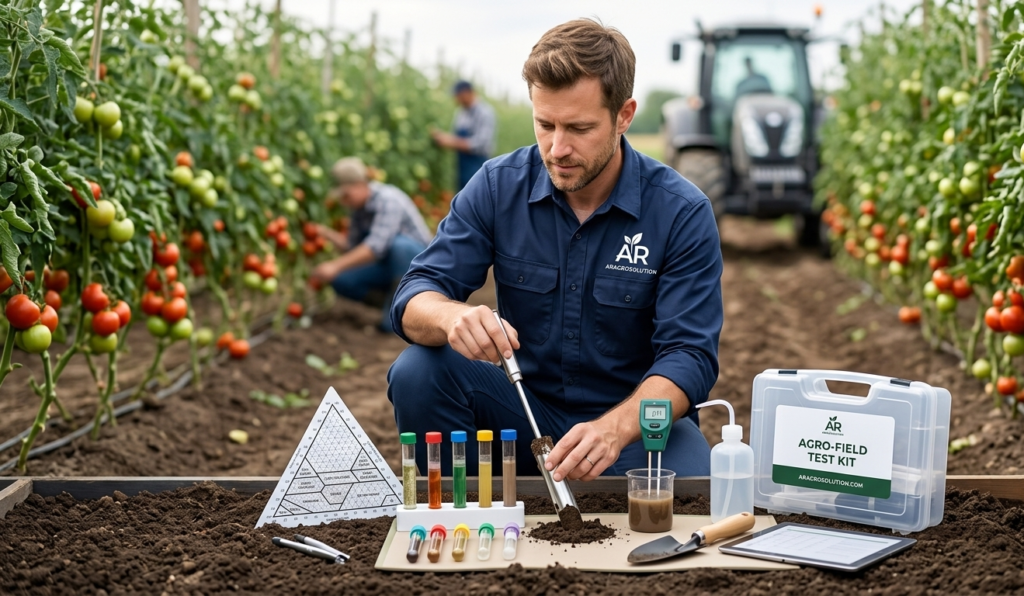
Pingback: How to test The Soil of Your Farm, Lawn And Garden? - AR agrosolution