Welcome to our agro farming Rostrum . Here you can get the proper solution of your agro farming problem. We offer you enough information and guideline of modern cultivating system. We try to find out the proper way of farming that gives you maximum output. We research and analyze your farming related problem and provide proper guideline how to overcome it. We research and review of different farming tools and suggest you which tool is perfect for your farm, Lawn, And Garden. In this case we today we review Best Microgreens Growing Kit which best for indoor Gardening or farming with room decoration. And provide the full buying guide so that you may easily choose the perfect one for you.
Looking for the best microgreens growing kit for your kitchen counter? We compared five popular options—from self-watering trays to stackable stainless steel sprouters—so you can pick the right one.
Microgreens have become a kitchen staple for anyone who wants fresh, nutrient-dense greens without a backyard garden. They germinate in a matter of days, take up almost no space, and can be snipped straight onto a sandwich or salad. The catch is that not every growing kit is built the same way: some come with everything you need including seeds, while others are just trays you fill in with your own seeds and growing medium. Picking the right setup makes the difference between a thriving countertop garden and a soggy, moldy mess.
To make the decision easier, we dug into five widely available microgreens growing kits on Amazon, comparing what’s actually in the box, how each one waters and drains, and who each kit is best suited for. Below you’ll find a quick comparison table followed by a detailed breakdown of each pick.
Our Top Picks
| # | Image | Product Name | $$$ |
|---|---|---|---|
| 1 |  |
ZestiGreens Self-Watering Kit | |
| 2 |  |
FANHAO Stainless Steel Tray Kit | |
| 3 | 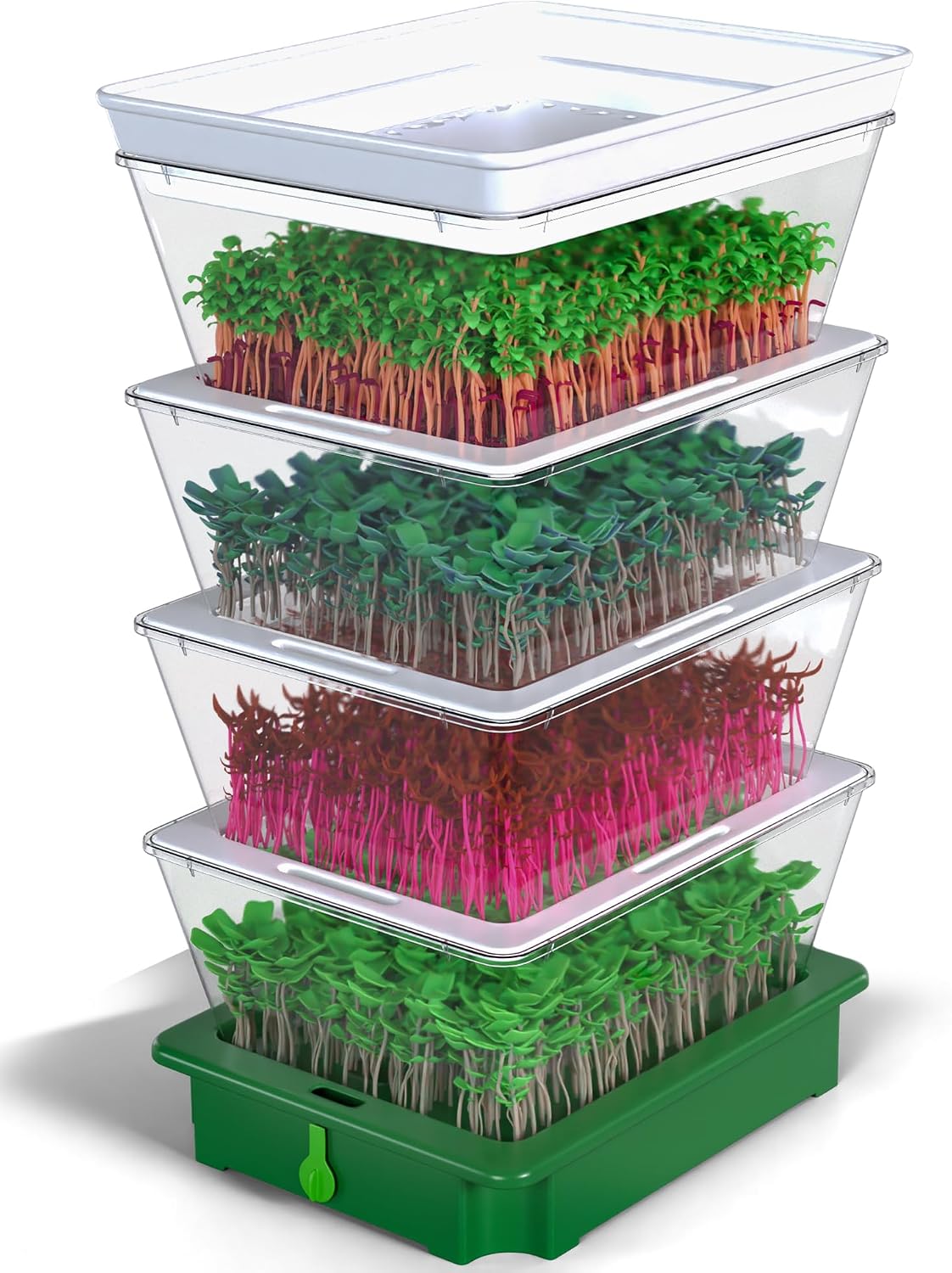 |
ZestiGreens 4-Tier Stackable Kit | |
| 4 |  |
RMBHM 6-Pack Trays Kit | |
| 5 |  |
SUNPRO 2-Pack Sprouter Tray |
5 Microgreens Growing Kit Review
Our team select top five Best Microgreens Growing Kit by using their previous farming experience. Beside this they research and analysis their selected product according to the authentic customer review and the product information which is provided by the manufacturing company. They try to collect and use all the 5 product in their own farm so that they easily differentiate every characteristics of these product. Based on their analysis, research and using experience they selected top 5 Best Microgreens Growing Kit for you which is described briefly in below….
1. ZestiGreens Microgreens Growing Kit Self-Watering with Bamboo Surround – Best Overall
PROS
- +Ships with seeds included — Red Garnet Amaranth and a Broccoli/Kale/Kohlrabi/Arugula/Cabbage superfood mix
- +Hydroponic insert can be swapped for soil, so it works for a wider range of seed types
- +Bamboo surround looks good sitting out on a counter, not just functional
- +Comes with a 16-page illustrated grow guide, which flattens the learning curve for first-timers
CONS
- −The plastic insert has no bottom, so it needs gentle handling when moved
- −Priced higher than bare trays since it bundles seeds and a wooden frame
SPECIFICATIONS
| Tray Size | 12″ x 6″ with bamboo surround |
| Watering Method | Self-watering hydroponic insert; water once |
| Seeds Included | Yes — Red Garnet Amaranth + Superfood Mix |
| What’s Included | Tray, bamboo surround, hydroponic insert, blackout felt lid, 2 hemp grow mats, seed packs, grow guide |
| Time to Harvest | 7–10 days |
ZestiGreens built this kit for people who want to go from box to harvest without buying anything else, and that’s exactly what makes it our top pick for the best microgreens growing kit on this list. The bamboo surround and hydroponic insert give it a countertop-friendly look, while the included blackout lid and hemp mats handle germination without any guesswork.
In daily use, the “water once” design does most of the heavy lifting — you fill the reservoir, cover the seeds until they sprout, then let the mat wick moisture upward. Reviewers note the growth can be slightly uneven between batches, so it rewards a bit of patience on the first grow.
This kit suits total beginners best, since the seeds, tray, and instructions are all bundled together. If you already have seeds on hand and just want trays, one of the picks further down the list will stretch your budget further.
Get the ZestiGreens Microgreens Growing Kit Self-Watering with Bamboo Surround at Amazon
2. FANHAO 2-Pack Sprouting Tray Kit, Stainless Steel Soil-Free Cultivation Germination Tray – Best Premium Option
PROS
- +Made from rust-resistant 304 stainless steel that will outlast plastic trays
- +Smooth metal surface wipes clean fast, with no plastic haze or staining over time
- +Handles a wide seed range — mung, wheatgrass, cat grass, radish, alfalfa, and more
- +Comes in a presentation box, which makes it an easy gift for a gardener
CONS
- −No seeds included, so budget for those separately
- −Requires manual watering rather than a self-watering reservoir
SPECIFICATIONS
| Material | 304 food-grade stainless steel |
| What’s Included | 2 mesh sprouting trays, 2 base trays, 2 fine mesh inserts |
| Seeds Included | No |
| Best For | Mung beans, wheatgrass, cat grass, radish, alfalfa microgreens |
| Cleaning | Wipes clean; smooth steel surface, no soaking stains |
If longevity matters more to you than a bundled seed pack, the FANHAO stainless steel kit earns its spot as our premium pick. Food-grade steel means it won’t warp, stain, or crack the way budget plastic trays eventually do, which matters if you’re planning to sprout every week for years.
The mesh design promotes strong drainage and airflow, so seeds germinate quickly without pooling water at the base. Cleanup is where the steel really shines: a quick rinse leaves the smooth surface looking new, unlike porous plastic that can hold onto residue and odor.
This is the pick for anyone who sprouts often enough to justify paying more upfront for a tray that won’t need replacing. First-timers who just want to test the hobby might prefer a cheaper plastic starter kit before upgrading.
Get the FANHAO 2-Pack Sprouting Tray Kit, Stainless Steel Soil-Free Cultivation Germination Tray at Amazon
3. ZestiGreens 4-Tier Sprouting Kit – Stackable Seed Sprouter Trays with Drain Spout – Most Versatile
PROS
- +Built-in bottom drain spout lets you rinse without unstacking the trays
- +Use 1 to 4 trays at once, so batch size scales to what you actually need
- +Taller side walls give sprouts room to grow without crowding
- +Backed by a lifetime replacement warranty and US-based support
CONS
- −Seeds sold separately, so it’s not a full starter kit out of the box
- −Takes up more counter space when fully stacked with all 4 tiers
SPECIFICATIONS
| Tiers | 4 stackable, interchangeable growing trays |
| Drainage | Built-in bottom spout for direct sink draining |
| Material | BPA-free, food-grade plastic |
| Seeds Included | No — sold separately |
| Warranty | Lifetime replacement warranty |
This is the kit to reach for if you want flexibility more than a fixed setup. Instead of one tray, you get four stackable layers that can be run independently, so you might sprout broccoli in one tier and alfalfa in another without them competing for space.
The standout feature is the drain spout at the base: rinsing is as simple as pouring water through the stack and letting it exit at the bottom, no lifting trays apart or tilting jars over the sink. That alone removes the most tedious part of daily sprout care.
It’s best suited to growers who already have a seed source and want a system that scales with demand, whether that’s a single small tray for a solo cook or all four tiers running for a family that goes through sprouts quickly.
Get the ZestiGreens 4-Tier Sprouting Kit – Stackable Seed Sprouter Trays with Drain Spout at Amazon
4. RMBHM Microgreens Growing Trays Kit – 6 Pack with 12 Hemp Fiber Grow Mats – Best Value
PROS
- +Six trays and twelve hemp mats mean multiple crops can run at once
- +Hemp fiber mats hold water evenly while still letting roots breathe
- +Lowest per-tray cost of any kit on this list, ideal for growing at scale
- +Compact 15 x 11 x 2.5-inch trays stack neatly on shelves or countertops
CONS
- −No seeds included, so this is trays and mats only
- −Managing six trays at once takes more counter space than a single-tray kit
SPECIFICATIONS
| Tray Size | 15″ x 11″ x 2.5″ each |
| Quantity | 6 grow trays, 12 hemp fiber grow mats |
| Growing Medium | Hemp fiber mats, soil-free |
| Seeds Included | No |
| Best For | Microgreens, wheatgrass, seedlings, bulk growing |
For anyone growing microgreens regularly enough that a single tray isn’t enough, this six-pack stretches your dollar the furthest. Buying trays and hemp mats in bulk this way works out cheaper per tray than most single-tray kits, without giving up build quality.
The hemp fiber mats are the real workhorse here, retaining moisture without waterlogging seeds, which keeps mold risk lower than some cheaper synthetic mats. With six trays, you can stagger plantings so a fresh harvest is ready roughly every few days instead of all at once.
This kit is best for households or small hobby growers who go through microgreens quickly and don’t need a bundled seed pack — you supply your own seeds and get a straightforward, no-frills tray-and-mat system in return.
Get the RMBHM Microgreens Growing Trays Kit – 6 Pack with 12 Hemp Fiber Grow Mats at Amazon
5. SUNPRO 2-Pack Seed Sprouter Tray with Humidity Lid, BPA Free Food Grade Soil-Free Sprouting Kit – Best Budget Pick
PROS
- +Lowest price of any kit in this roundup, a low-risk way to try microgreens
- +Dense mesh holes keep small seeds like mung beans from falling through
- +Humidity lid helps hold moisture in without extra misting
- +BPA-free food-grade PP construction keeps it safe for edible crops
CONS
- −Plastic construction won’t hold up as long as the stainless steel option
- −No seeds included, and daily watering is manual rather than self-watering
SPECIFICATIONS
| Material | BPA-free, food-grade PP plastic |
| Tray Size | 13.2″ x 9.84″ |
| What’s Included | 2 sprouter trays with humidity lid |
| Seeds Included | No |
| Best For | Beans, peas, wheatgrass, cat grass sprouting |
If you just want to find out whether growing your own microgreens is worth the effort before committing to a pricier setup, this SUNPRO tray keeps the entry cost low. It’s a straightforward two-tray system with a humidity lid, no bells and whistles, but it covers the basics well.
The dense mesh holes are a small but useful detail — smaller seeds like mung beans and alfalfa stay put instead of slipping through, which is a common complaint with cheaper trays that use wider holes.
This kit fits casual growers or anyone testing the waters before buying a more feature-rich kit. If you already know you’ll be sprouting long-term, the stainless steel or self-watering options on this list will likely serve you better over time.
Get the SUNPRO 2-Pack Seed Sprouter Tray with Humidity Lid, BPA Free Food Grade Soil-Free Sprouting Kit at Amazon
How to Choose the Best Microgreens Growing Kit
A microgreens growing kit is any setup that lets you germinate and grow seedlings indoors to the “microgreen” stage, usually within a week or two, without needing a full outdoor garden. Kits range from single self-watering trays with seeds included to bare stackable trays meant for growers who already source their own seeds. The right choice depends on how often you plan to grow, how much counter space you have, and whether you want a guided, all-in-one experience or a bare-bones system you can customize.
Watering System
Some kits use a self-watering reservoir or wicking mat that only needs to be filled once, while others require you to manually rinse and drain trays daily. Self-watering systems are more forgiving for beginners since they reduce the risk of over- or under-watering. Manual systems, on the other hand, give you more direct control over moisture levels once you know what you’re doing.
Material and Durability
Trays are typically made from BPA-free plastic, bamboo-framed hydroponic inserts, or stainless steel. Plastic keeps costs down and is perfectly food-safe, but it can degrade or stain with heavy use. Stainless steel costs more upfront but resists rust, cleans easily, and tends to outlast plastic trays by years rather than seasons.
Seeds Included vs. Bring Your Own
Kits that bundle seeds are convenient for first-time growers, since you don’t need to source anything separately before your first harvest. Bare tray kits are usually cheaper per unit and give you the freedom to choose specific microgreen varieties, but they require buying seeds on your own.
Capacity and Batch Size
A single tray works fine for someone snacking on microgreens occasionally, but if you’re feeding a household or want a continuous supply, multi-tray or stackable kits let you stagger plantings so you’re never without a fresh batch.
Drainage Design
Standing water is one of the most common reasons a home sprouting setup fails, since it invites mold. Look for trays with dense drainage holes, a built-in spout, or a wicking mat design that pulls excess moisture away from the seeds rather than letting it pool.
Microgreens Nutrition and Food Safety
Part of the appeal of growing your own microgreens is nutritional. Research from the University of Maryland and the USDA’s Agricultural Research Service found that many microgreen varieties contain notably higher concentrations of vitamins C, E, K, and beta-carotene than their fully grown counterparts, according to the USDA Agricultural Research Service. That’s a strong argument for keeping a kit running at home rather than relying only on store-bought greens.
It’s worth knowing that microgreens and sprouts are treated differently under food safety guidance. Sprouts are grown fully submerged in water without light, which the FDA notes creates warm, humid conditions where bacteria can multiply even with careful sanitation, as detailed in the FDA’s guidance on seeds used for sprouting. Microgreens grown in soil or a soil-free mat and harvested above the growing line carry comparatively lower risk, but rinsing your tools, using untreated tap water, and sourcing seeds intended for sprouting or microgreens still matters no matter which kit you use. If you’d like more growing tips tailored to specific varieties, our team at Agrosolution regularly covers indoor gardening topics like this one.
How to Use a Microgreens Growing Kit
Getting started with any of the kits above follows roughly the same process, whether you’re using a self-watering tray or a bare stackable system.
- Soak your chosen seeds for 6–12 hours if the manufacturer’s instructions call for it, then spread them evenly across the growing mat or medium so they aren’t overlapping.
- Cover the seeds with a blackout lid or dark cloth for the first few days to encourage strong root development before they’re exposed to light.
- Water according to your kit’s design — fill the self-watering reservoir once, or rinse and drain manual trays once or twice daily — and keep the setup somewhere with good airflow to reduce mold risk.
- Once you see the first true leaves emerge, move the tray into indirect light and continue light watering until harvest, usually 7–14 days after planting. If growth looks uneven or slow, check that trays aren’t sitting in standing water, a detail our growing guides at Agrosolution walk through in more depth, and consult the manufacturer’s care instructions for troubleshooting specific to your kit.
Frequently Asked Questions
Q: Do I need soil to grow microgreens?
A: No — most of the kits on this list, including the RMBHM 6-Pack Trays Kit (#4) and the SUNPRO 2-Pack Sprouter Tray (#5), are designed to grow microgreens hydroponically on a mat or mesh instead of soil. Soil-free growing tends to be cleaner and faster to set up, though a few seed varieties with larger seeds, like sunflower or pea, can still benefit from soil. If you’d rather have the option to switch between methods, the ZestiGreens Self-Watering Kit (#1) lets you swap its hydroponic insert for soil.
Q: How long does it take to grow microgreens at home?
A: Most kits produce a harvestable crop in about 7 to 10 days, though this varies by seed type and growing conditions. The ZestiGreens Self-Watering Kit (#1), for example, is built around a 7–10 day cycle, while sprouting-style trays like the FANHAO Stainless Steel Kit (#2) can produce edible sprouts even faster depending on the seed. Warmer rooms and consistent moisture generally speed up germination.
Q: Which kit is best for a complete beginner?
A: The ZestiGreens Self-Watering Kit (#1) is the easiest starting point since it includes seeds, a grow guide, and a self-watering design that removes most of the guesswork. If you’d rather start with something inexpensive to see if you enjoy the hobby before spending more, the SUNPRO 2-Pack Sprouter Tray (#5) is a low-cost way to get a feel for the process.
Q: Can I reuse these kits for multiple growing cycles?
A: Yes, all five kits are designed to be reusable. Trays and mats just need to be rinsed and, in some cases, replaced (like grow mats) between cycles. The FANHAO Stainless Steel Kit (#2) is particularly well suited to repeated use since steel resists the staining and wear that plastic trays can pick up over many grow cycles.
Q: What’s the difference between a sprouting kit and a microgreens kit?
A: Sprouting kits, like the FANHAO Stainless Steel Kit (#2) and the ZestiGreens 4-Tier Stackable Kit (#3), grow the entire germinated seed including the root, typically eaten within a few days of soaking. Microgreens kits, like the ZestiGreens Self-Watering Kit (#1), grow seedlings until they develop their first true leaves, which are then snipped above the growing medium. Microgreens generally take a bit longer to reach harvest but offer a different texture and flavor profile than sprouts.
Final Thoughts
Any of these five kits will get you growing fresh greens indoors, but the right one comes down to how hands-off you want the process to be and how often you plan to harvest. Consider whether you’d rather have seeds and instructions bundled in for you, or prefer the flexibility of sourcing your own seeds and scaling up with extra trays. Durability is worth weighing too, especially if you expect to be sprouting weekly for years rather than trying it out for a season.
For most buyers, the ZestiGreens Self-Watering Kit offers the best balance of convenience and value since it includes everything needed for a first harvest. If you’d rather invest in a tray that will last for years of regular use, the FANHAO Stainless Steel Tray Kit is the stronger pick for its rust-resistant build and easy cleanup.