Welcome to our agro farming Rostrum . Here you can get the proper solution of your agro farming problem. We offer you enough information and guideline of modern cultivating system. We try to find out the proper way of farming that gives you maximum output. We research and analyze your farming related problem and provide proper guideline how to overcome it. We research and review of different farming tools and suggest you which tool is perfect for your farm, Lawn, And Garden. In this case we today we review Best Grow Tent for Indoor Plants which best for indoor Gardening or farming with room decoration. And provide the full buying guide so that you may easily choose the perfect one for you.
Looking for the best grow tent for indoor plants? We compared five popular Mylar-lined tents on build quality, size options, and value.
An indoor grow tent turns a spare closet, basement corner, or garage nook into a controlled little greenhouse. A light-tight, reflective interior keeps every watt of your grow light working for your plants instead of leaking into the room, while a sturdy frame and removable floor tray make setup, watering, and cleanup far less stressful than trying to rig up blackout curtains yourself. Whether you’re starting seedlings, growing herbs, or running a full hydroponic setup, the right tent makes the difference between fighting your environment and controlling it.
Below we break down five tents that consistently show up among shoppers’ top picks, from a compact budget option to a smart, app-controlled system. Each one is reviewed on its own merits so you can match the size, features, and price to your space.
Our Top Picks
| # | Image | Product Name | $$$ |
|---|---|---|---|
| 1 |  |
VIVOSUN S448 4×4 Grow Tent | |
| 2 | 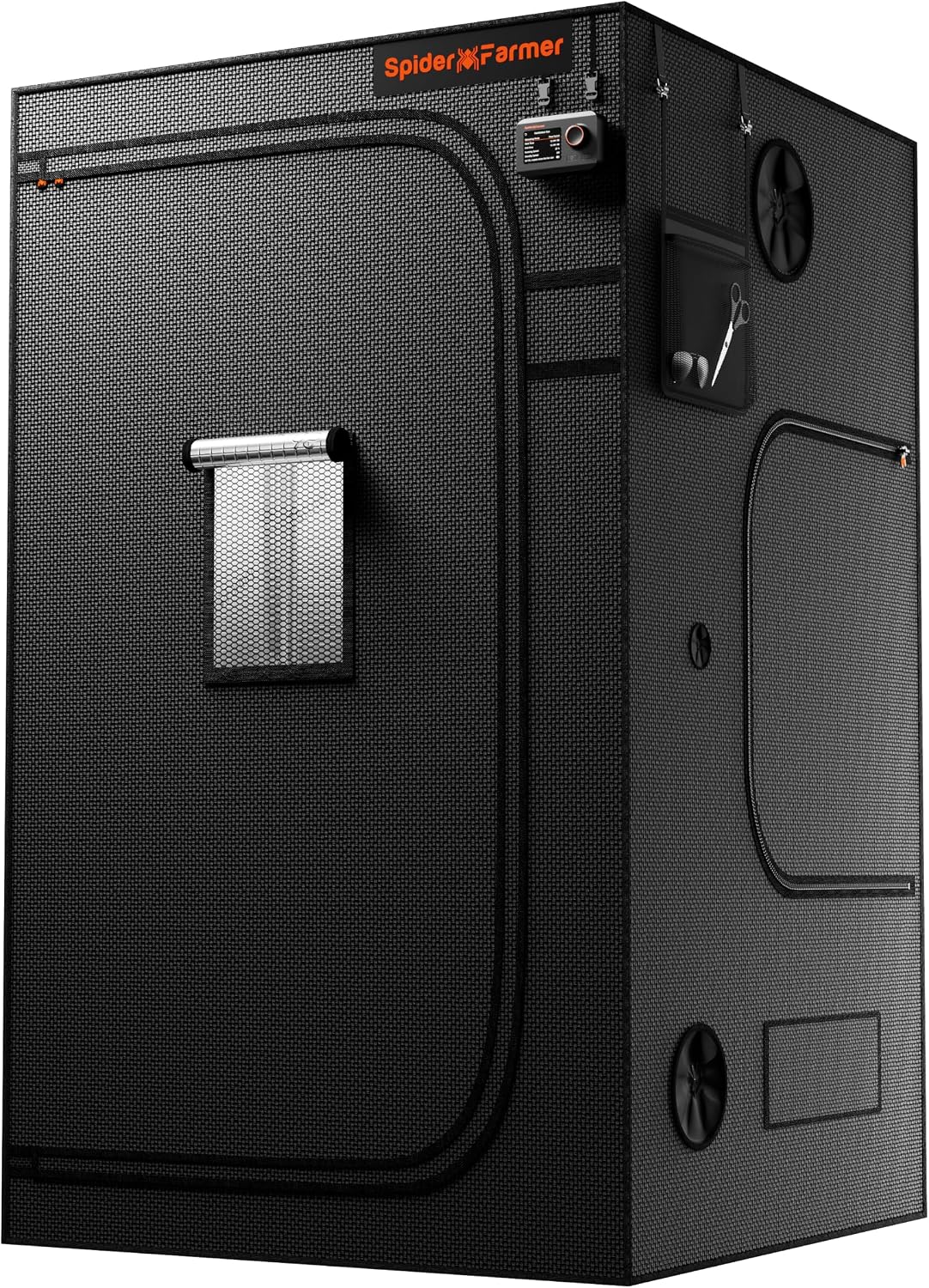 |
Spider Farmer 4×4 Pro-Grade Tent | |
| 3 |  |
G HYDRO 3×3 Smart Tent Kit | |
| 4 |  |
MELONFARM 2×2 Grow Tent | |
| 5 |  |
Growtent Garden 4×2 Tent |
5 Best Grow Tent for Indoor Plants Review
Our team select top five Best Grow Tent for Indoor Plants by using their previous farming experience. Beside this they research and analysis their selected product according to the authentic customer review and the product information which is provided by the manufacturing company. They try to collect and use all the 5 product in their own farm so that they easily differentiate every characteristics of these product. Based on their analysis, research and using experience they selected top 5 Best Grow Tent for Indoor Plants for you which is described briefly in below….
1. VIVOSUN S448 4×4 Grow Tent, 48″x48″x80″ High Reflective Mylar with Observation Window and Floor Tray – Best Overall
PROS
- +Metal top bars rated to support up to 100 lbs of lights and equipment
- +340g high-density fabric with PE lining and Mylar walls for solid light-blocking
- +Lower observation window aids heat dissipation as well as viewing
- +Tool-free corner connectors for quick assembly
CONS
- −4×4 footprint needs a dedicated room or closet
- −No smart controls, so ventilation and lighting are managed manually
SPECIFICATIONS
| Dimensions | 48″ x 48″ x 80″ |
| Fabric | 340g high-density Oxford canvas, PE liner, Mylar interior |
| Frame Load Rating | Top bars support up to 100 lbs |
| Viewing Window | Transparent plastic window with hook-and-loop cover |
| Floor Tray | Removable waterproof tray |
The VIVOSUN S448 is a 4×4-foot tent that gives you enough headroom and footprint for several plants without taking over an entire room. VIVOSUN is one of the more established names in home hydroponics, and this tent reflects that: the frame, fabric weight, and stitching all feel a step above entry-level options.
In daily use, the lower observation window is the standout touch. It lets you check on plants and vent excess heat without unzipping the whole tent, which keeps temperature and humidity more stable over a grow cycle. The 100-lb top bar rating also means you can hang a serious LED fixture plus a carbon filter without worrying about sag.
This tent suits anyone moving beyond a single-plant setup who wants a dependable, mid-size grow tent for indoor plants that won’t need replacing after one season. It’s a strong value for the size and build quality you get.
Get the VIVOSUN S448 4×4 Grow Tent at Amazon
2. Spider Farmer 4×4 Grow Tent, 48″x48″x80″, 1680D Thicken Mylar Canvas with Enlarged View Window and Removable Floor Tray – Best Premium Option
PROS
- +3x-thicker hardened steel poles support up to 150 lbs
- +Tear-proof, waterproof 1680D Oxford canvas with diamond reflective Mylar
- +Enlarged 11.8″x15.7″ viewing window plus dedicated controller hooks
- +Premium SBS zippers with a double-protection flap
CONS
- −Costs more than standard-grade 4×4 tents
- −Duct opening size can run slightly snug for 6-inch ducting
SPECIFICATIONS
| Dimensions | 48″ x 48″ x 80″ |
| Fabric | 1680D tear-proof Oxford canvas, diamond reflective Mylar |
| Frame Load Rating | Hardened steel poles support up to 150 lbs |
| Viewing Window | Enlarged 11.8″ x 15.7″ window |
| Extras | Controller hooks, tool bag, removable floor tray |
Spider Farmer built this 4×4 tent for growers who plan to run heavier equipment: bigger LED fixtures, carbon filters, trellis netting, all hanging from the same frame. The 150-lb load rating and 1680D canvas put it a clear notch above standard-duty tents.
The enlarged viewing window is genuinely useful day to day, giving a much wider look inside than the small round windows on cheaper tents, and the dedicated controller hooks keep smart ventilation hubs off the tent floor. Reviewers note the thicker material and reinforced zippers hold up well over repeated use.
If you’re outfitting a serious hydroponic or multi-light setup and don’t mind paying more upfront, this is the sturdier long-term choice among the tents here.
Get the Spider Farmer 4×4 Grow Tent at Amazon
3. G HYDRO 3×3 Grow Tent Kit Complete System with WiFi App Control, 1680D Oxford Canvas – Most Versatile
PROS
- +Integrated WiFi controller manages temperature, humidity, and lighting from an app
- +Sold as a complete system rather than just the tent shell
- +Black 1680D Oxford canvas with a reflective, light-tight interior
- +3×3-foot footprint fits homes, garages, and basements
CONS
- −App-connected hardware means one more device to set up and keep updated
- −Less established brand track record than VIVOSUN or Spider Farmer
SPECIFICATIONS
| Coverage | 3 ft x 3 ft interior growing area |
| Fabric | 1680D black Oxford canvas, reflective interior |
| Controller | Integrated WiFi app controller |
| Manages | Temperature, humidity, and lighting schedules |
| Design | Light-tight sealed exterior |
The G HYDRO kit stands apart because it’s not just a tent shell — it bundles an integrated WiFi controller so you can check and adjust growing conditions from your phone instead of walking over to the tent. That makes it a good fit for anyone who travels often or simply wants less manual fiddling with fans and timers.
The 3×3 footprint is a practical middle ground: bigger than a closet tent, smaller than a full 4×4 room takeover, and the black Oxford canvas does a solid job of sealing in light. Because the smart controller is built into the system, there’s less guesswork matching separate ventilation and lighting controllers to the tent.
This tent suits growers who want a all-in-one, tech-forward setup rather than assembling a tent and controller hub separately, and who are comfortable managing a WiFi-connected device.
Get the G HYDRO 3×3 Grow Tent Kit at Amazon
4. MELONFARM 2×2 Grow Tent, 24″x24″x48” High Reflective 600D Diamond Mylar Canvas with Observation Window and Floor Tray – Best Budget Pick
PROS
- +Compact 2×2 footprint fits closets and small rooms
- +Double transparent viewing windows for checking plants
- +Tool-free assembly with an included instructional pamphlet
- +One of the more affordable tents in this roundup
CONS
- −Limited to about 1-2 plants in 2-gallon pots
- −Some buyers report zipper quality is hit-or-miss
SPECIFICATIONS
| Dimensions | 24″ x 24″ x 48″ |
| Fabric | 600D double-stitched canvas, reflective waterproof Mylar lining |
| Plant Capacity | Recommended for 1-2 plants in 2-gallon pots |
| Viewing Window | Double transparent viewing door |
| Floor Tray | Removable floor tray included |
The MELONFARM 2×2 is the smallest and most affordable grow tent for indoor plants on this list, and it’s built with the essentials rather than extras. The 600D canvas and Mylar lining still block light effectively, and the metal-pole frame with corner connectors goes together in minutes without tools.
It’s sized for a single plant or a couple of small ones, which makes it a natural fit for a bedroom closet, a corner of a home office, or a first-time grower testing the waters before committing to a larger setup. Buyers frequently mention the reflective lining being noticeably shiny and the frame feeling sturdier than expected for the price.
Choose this one if your space or budget is tight and you want to start small before scaling up to a 4×4 tent later.
Get the MELONFARM 2×2 Grow Tent at Amazon
5. Growtent Garden 48″x24″x60″ Reflective 600D Mylar Hydroponic Grow Tent with Observation Window and Floor Tray – Best for Beginners
PROS
- +4×2 footprint is easy to tuck into a narrow closet or corner
- +Tool-free setup, straightforward for a first-time grow tent
- +600D double-stitched canvas resists tearing during setup and moves
- +Heavy-duty all-metal poles for a stable frame
CONS
- −Narrow 24″ depth limits how many plants fit side by side
- −Fewer accessory bundles available compared to bigger-name brands
SPECIFICATIONS
| Dimensions | 48″ x 24″ x 60″ |
| Fabric | 600D double-stitched canvas with reflective Mylar interior |
| Frame | Heavy-duty all-metal poles |
| Viewing Window | Transparent observation window |
| Floor Tray | Included, removable |
The Growtent Garden 4×2 slots neatly between the tiny 2×2 tents and the larger 4×4 options. Its narrow, elongated shape is well suited to closets, hallways, or a strip along a garage wall where a square tent wouldn’t fit.
Assembly follows the same tool-free, pole-and-connector approach as the other tents here, which makes it approachable for someone setting up their very first grow tent. The 600D canvas and metal-pole frame hold their shape well once assembled, and the observation window keeps daily plant checks quick.
This is a solid pick for beginners who want a bit more growing room than a 2×2 tent offers but aren’t ready to commit to a full 4×4 setup yet.
Get the Growtent Garden 4×2 Grow Tent at Amazon
How to Choose a Grow Tent for Indoor Plants
A grow tent for indoor plants is essentially a light-tight, reflective enclosure that gives you full control over your plants’ environment, no matter what’s happening in the room around it. It matters because indoor growing lives or dies on consistency: stray light, uneven temperatures, and humidity swings all stress plants and cut into yields. Picking the right tent means matching its size, materials, and frame strength to the equipment you plan to run and the space you actually have available. For more on setting up an indoor growing space, our other guides dig into ventilation and lighting pairings in more detail.
Tent Size and Footprint
Measure your available space before you shop, then size the tent to leave a few inches of clearance on every side for airflow and cable runs. A 2×2 tent suits a single plant in a closet, while a 4×4 or larger gives room for multiple plants plus a carbon filter and inline fan. Going too small forces you to squeeze equipment against the canvas walls, which increases the risk of scorching leaves or blocking airflow.
Fabric Denier and Light-Blocking
Denier (D) measures the thickness and durability of the canvas — 600D is a solid standard, while 1680D holds up to more handling and resists tearing during setup and teardown. Whatever the denier, the interior lining should be 100% reflective Mylar so no light energy from your grow lamp goes to waste, and the zippers should have a light-blocking flap so no stray light escapes once the tent is closed.
Frame Strength and Load Rating
The frame has to support more than just the fabric — it’s also holding your grow light, any ducting, and possibly a trellis net. Look at the manufacturer’s listed load rating on the top bars before assuming a tent can handle your setup; a tent rated for 100 lbs is fine for a single LED fixture, but heavier multi-light or full hydroponic rigs benefit from a tent like the Spider Farmer above that’s rated closer to 150 lbs.
Observation Windows and Ventilation Ports
A viewing window lets you check on plants without opening the whole tent and disturbing the internal climate, and a lower window placement can double as a heat-dissipation point. Also check how many ducting ports the tent has and whether they’re sized for standard 4-inch or 6-inch ducting, since an undersized port can bottleneck your whole ventilation system.
Ease of Assembly and Floor Tray
Nearly every tent in this category uses a tool-free pole-and-connector frame, but fit and finish vary — loose connectors or mismatched pole lengths make setup frustrating. A removable, waterproof floor tray is worth prioritizing too, since it protects the surface underneath from spills and makes cleanup between grows far simpler.
Grow Tent Lighting and Maintenance Tips
Whatever tent you choose, the lighting you pair with it does most of the work. According to the University of Maryland Extension, light intensity, duration, and spectrum all shape how well indoor plants grow, and supplemental lighting is often necessary once natural light alone isn’t enough. Keeping your tent’s reflective lining clean and your grow light at the recommended distance from your canopy helps you get the most out of whatever fixture you choose.
Routine maintenance keeps a tent performing well for years: wipe down the Mylar interior periodically to maintain reflectivity, inspect zippers and seams for light leaks, and lubricate sticky zippers with a silicone-based product rather than forcing them.
How to Use a Grow Tent for Indoor Plants
Getting a new tent from box to functioning grow space only takes a few deliberate steps.
- Assemble the frame on a flat, clear surface, following the pole-and-connector order in the included instructions, then pull the canvas cover over the frame and zip it into place.
- Install the floor tray, hang your grow light and any ventilation equipment from the top bars, and route ducting and cables through the designated ports to keep the interior tidy.
- Set your light on a timer for a consistent photoperiod and monitor temperature and humidity for the first few days to fine-tune fan speed and light height; the University of Vermont Extension recommends checking your light’s Correlated Color Temperature and Color Rendering Index to make sure it’s suited for plant growth.
- If you notice light leaks, drooping leaves, or excess condensation, check zippers and seams first, then adjust ventilation before assuming the tent itself is at fault — most issues trace back to airflow or light distance rather than the tent’s construction.
Frequently Asked Questions
Q: What size grow tent do I need for a few houseplants or vegetable seedlings?
A: For one or two plants, a compact 2×2 tent like the MELONFARM (#4 on our list) is usually plenty of room. If you’re starting several seedlings or want space to add a second plant later, a 4×2 tent such as the Growtent Garden (#5) gives more flexibility without taking over a whole room. Larger 4×4 tents are better suited to multiple mature plants or a full hydroponic setup.
Q: Does a thicker canvas denier actually matter for indoor growing?
A: Yes — a higher denier fabric, like the 1680D canvas on the Spider Farmer tent (#2), resists tearing and holds its shape better through repeated assembly and teardown than a thinner 600D fabric. It also tends to block light more reliably over time as the material sees wear. For casual, long-term setups that don’t move often, a 600D tent is usually durable enough.
Q: How much weight can I hang from a grow tent’s frame?
A: This varies by tent, so always check the manufacturer’s rated capacity before hanging equipment. The VIVOSUN S448 (#1) supports up to 100 lbs on its top bars, while the Spider Farmer 4×4 (#2) is rated for up to 150 lbs thanks to its thicker steel poles, making it the better choice for heavier multi-light setups.
Q: Is a smart, app-controlled grow tent worth the extra complexity?
A: It depends on how hands-on you want to be. The G HYDRO 3×3 kit (#3) bundles WiFi control for temperature, humidity, and lighting, which is convenient if you travel or simply prefer remote monitoring. If you’d rather keep things simple with manual timers and fans, a standard tent like the VIVOSUN or MELONFARM works just as well without an extra device to manage.
Q: Can beginners set up a grow tent without any special tools?
A: Yes, all five tents in this roundup use tool-free, pole-and-connector frames designed for one-person assembly in a matter of minutes. The Growtent Garden (#5) and MELONFARM (#4) are particularly straightforward first tents thanks to their smaller footprints and simple instructions.
Final Thoughts
The right grow tent for indoor plants comes down to matching size, frame strength, and fabric quality to your equipment and space. Prioritize a reflective Mylar interior and a light-tight zipper design first, then decide how much frame load capacity and denier thickness you actually need based on the lights and accessories you’re running.
For most buyers, the VIVOSUN S448 4×4 offers the best balance of size, build quality, and price for a first serious grow tent. If you’re running heavier lighting or a multi-light setup, the Spider Farmer 4×4 is the stronger pick for its 150-lb frame rating and thicker 1680D canvas.