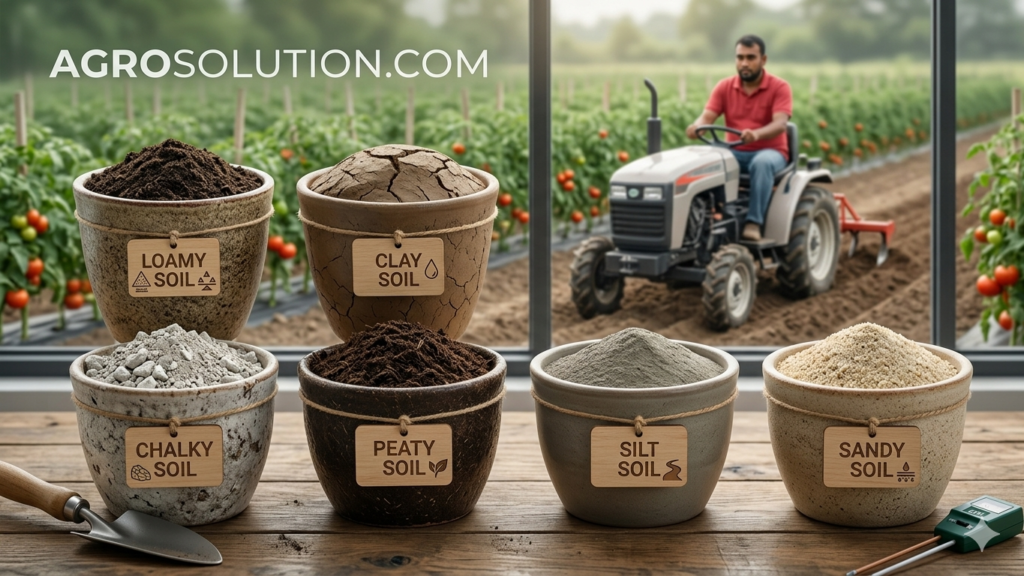
You may know that the best type of soil is the one that which yields a plentiful harvest with low planting cot that means the least amount of tillage and fertilizer applied. Do you think the best types of soil exist? Both scientists and growers agree that among all the type of soil loam is the easiest to work with yet the most fertile. No soil is absolute but loam is precisely balanced composition of 40% silt, 40% sand, and 20% clay. Moreover it maximizes positive effects while utilizing each component’s most outstanding qualities.
Don’t worry all type of soil is good for specific crop farming by crop rotation. Just you need to find out which type of soil you have and which crop is suitable for it. By knowing the soil types you are working with allows you to make the best possible amendments and choose the plants that produce the most fruit. It doesn’t matter whether you have loam, sand, or any other type, it is still required to cultivate and keep an eye out for any changes.
The Best Soil Types For Farming
At ARAGROSOLUTION, we often say that a farmer’s greatest asset isn’t their machinery—it’s the complex ecosystem beneath their boots. Choosing the right soil is the most critical decision in the agricultural cycle. While many believe any “dirt” will do, professional agriculture requires a specific balance of texture, nutrients, and biology.
The Gold Standard:
Loamy Soil: If you are looking for the absolute best soil for general agriculture, Loamy Soil is the undisputed champion.
- The Composition: A balanced mix of approximately 40% sand, 40% silt, and 20% clay.
- Why it Works: It offers the “best of all worlds”—the drainage of sand, the fertility of silt, and the nutrient-holding capacity of clay.
- Best For: High-value crops like tomatoes, grains, and most garden vegetables.
The Specialized Contenders: Depending on your specific plantation goals, other soil types offer unique advantages:
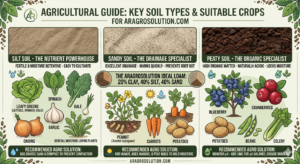
1. Silt Soil (The Nutrient Powerhouse)Silt particles are smaller than sand but larger than clay.
- Pros: Highly fertile and holds moisture remarkably well.
- Pros: Smooth texture makes it easy to cultivate and plough.
- Best For: Leafy greens like spinach, lettuce, and moisture-loving root crops like garlic.
2. Sandy Soil (The Drainage Specialist)Often favored for root expansion and quick warming in the spring.
- Pros: Incredible drainage that prevents root rot.
- Pros: Excellent for early-season crops because it warms up faster than heavier soils.
- Best For: Peanuts, carrots, and potatoes.
3. Clay Soil (The Mineral Reservoir)Clay is often misunderstood, but its density is a sign of immense mineral wealth.
- Pros: Unmatched ability to hold onto water and essential nutrients.
- Best For: Heavy-feeding crops like rice, broccoli, and cabbage.
AR Tip: Clay requires careful management to avoid compaction.
The AR Health Checklist:
Suitability isn’t just about the type of soil; it’s about the vitality within it. For a soil to be truly “suitable” for a successful harvest, it must meet three criteria:
- Physical Structure: It must allow for root aeration and water movement.
- Biological Activity: A healthy field should contain at least 10 earthworms per square foot of soil to ensure natural aeration and nutrient cycling.
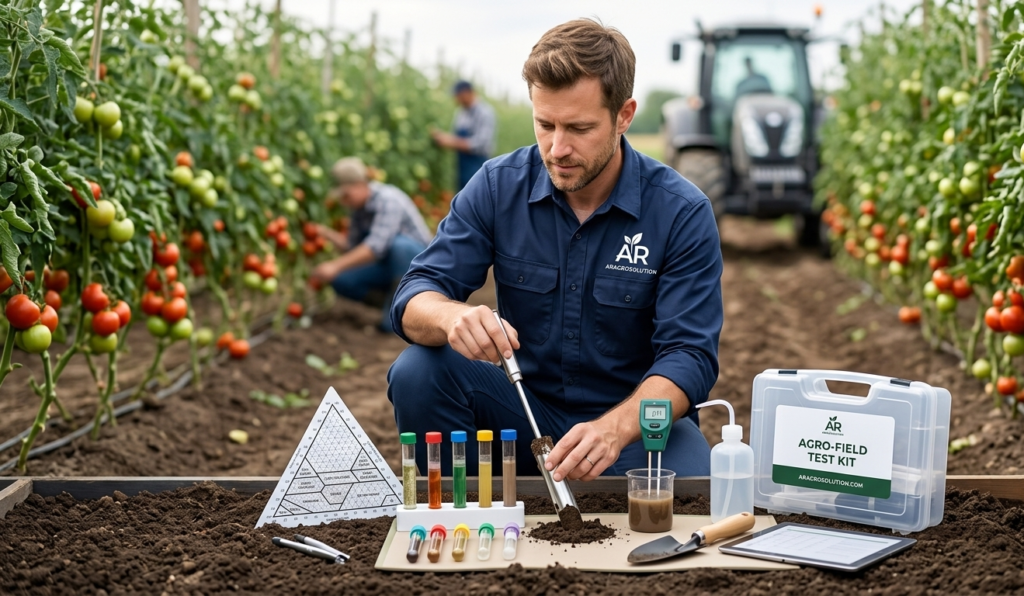
- Nutrient Balance: Regular testing is required to ensure your nitrogen, phosphorus, and potassium levels are optimized for your specific crop.
Making Your Soil Suitable for your crops by mixing humus, organic particle, and fertilizer. Because very few farmers start with “perfect” soil. The secret to Agricultural Resilience is learning how to amend what you have. Whether you are adding organic compost to sandy fields or coarse sand to heavy clay, AR is here to help you engineer the perfect foundation. Ready to transform your land? Start with a soil test today and grow with confidence.
Understanding the best soil for farming depends on matching crops with the right soil conditions.
Crop List According To Your Soil Types
| Types Of Soil | Feature | Crops |
|---|---|---|
| 1. Loamy Soil | Crops |
|
| 2. Clay Soil | ||
| 3. Peaty Soil | ||
| 4. Sandy Soil | ||
| 5. Silt Soil | ||
| 6. Chalky Soil |
Growing crops depends mainly on soil health. At the same time soil health depends on soil Type, Water Retention, Nutrient Retention, Root Retention, Presence of humus and organic particle, Presence of earthworm. Different type of soil is best for growing different type crops like Sandy soil is good for Groundnuts, Watermelon, Carrots. Clay soil is good for Rice, Broccoli, Wheat. Silt soil is good for almost all vegetables and cereals. Loamy Balanced soil is good for Almost all vegetables and cereals like slit. Peaty soil is good for Cabbage, Carrots, Beets. Chalky soil is good for Barley, Spinach, Beets etc.
For more information and ideas for soil types and crop list you may watch this video….
Cultivating Success from the Ground Up:
Building a high-yield plantation is a journey that begins long before the first seed is sown. At ARAGROSOLUTION, we believe that the secret to agricultural excellence lies in the harmony between your chosen crop and the foundation it grows in.
By mastering the AR Jar Test, performing regular Earthworm Audits, and applying precise soil amendments, you transition from traditional farming to precision agriculture. Whether you are optimizing a premium tomato field or preparing sandy soil for a peanut harvest, remember that healthy soil is a living community that requires your stewardship.
Agricultural Resilience isn’t just a goal—it’s a practice. Take the time to test, amend, and nurture your land today, and your soil will reward you with stronger plants, bigger harvests, and a sustainable future for seasons to come