Looking for the best lawn food (granules) to green up your yard this season? We compared five top-selling granular fertilizers on nitrogen release, coverage, and value.
A dull, patchy lawn almost always comes down to one thing: nutrients. Granular fertilizers remain the go-to choice for homeowners because they’re easy to spread, store well between applications, and give you more control over feed rate than liquid sprays. The right formula depends on your grass type, whether you want synthetic or organic ingredients, and how much square footage you’re covering, so the “best” bag really depends on your yard.
To make that decision easier, we dug into five well-reviewed granular options ranging from budget-friendly starter bags to professional-grade blends with multiple nitrogen sources. Below you’ll find a quick comparison table followed by a detailed breakdown of each product, plus a buying guide to help you match the right formula to your lawn.
Our Top Picks
5 Best Lawn Food (Granules) Review
1. Scotts Turf Builder Lawn Food, 32-0-4, Fertilizer for All Grass Types, Covers 15,000 sq. ft., 37.5 lbs. – Best Overall

PROS
- +Massive 15,000 sq. ft. coverage from a single bag
- +Works on any grass type, so no guesswork about compatibility
- +Applies to wet or dry lawns; watering in is optional
- +Backed by 150+ years of brand history and easy retail availability
CONS
- −Synthetic formula, not an organic or OMRI-listed option
- −Best results depend on calibrating a Scotts-brand spreader
SPECIFICATIONS
| NPK Ratio | 32-0-4 |
| Coverage Area | Up to 15,000 sq. ft. |
| Bag Weight | 37.5 lb |
| Grass Compatibility | All grass types |
| Feeding Frequency | Every 6–8 weeks |
Scotts Turf Builder Lawn Food is the fertilizer most homeowners picture when they think “granular lawn food,” and for good reason. The 37.5 lb bag stretches across 15,000 sq. ft., making it one of the most economical picks per square foot on this list, and the All-in-One particles are engineered to build deeper roots with every application.
In real-world use, it doesn’t require watering in, though a light watering speeds up results, and it can be applied on a wet or dry lawn without extra prep. That flexibility, combined with universal grass-type compatibility, makes it a low-friction choice for anyone new to a fertilizing routine.
This pick suits homeowners with mid-to-large lawns who want a reliable, budget-conscious synthetic formula. If you specifically want organic ingredients, one of the plant-based options further down this list will be a better fit.
Get the Scotts Turf Builder Lawn Food at Amazon
2. The Andersons Premium 28-0-12 Spring & Summer Fertilizer, Covers 5,000 sq. ft. – Best Premium Option

PROS
- +Three nitrogen release speeds for quick green-up plus steady feeding
- +Iron content deepens color without excess top growth
- +Potash strengthens cell walls for a hardier, more resilient turf
- +Backed by a structured, professional-grade lawn care program
CONS
- −Smaller 5,000 sq. ft. coverage per bag than the budget picks
- −Priced at a premium versus mass-market synthetic bags
SPECIFICATIONS
| NPK Ratio | 28-0-12 |
| Coverage Area | Up to 5,000 sq. ft. |
| Nitrogen Sources | Quick-, intermediate-, and slow-release |
| Key Additives | Iron and potash |
| Feeding Window | Up to 8 weeks |
The Andersons Premium Lawn Food is Application 3 of the brand’s structured Lawn Program, and it’s built for homeowners who want a more scientific approach to feeding. Instead of one type of nitrogen, it blends quick-, intermediate-, and slow-release sources for a fast initial response followed by weeks of steady growth.
Iron in the formula produces the kind of deep, dark green usually associated with professional turf care, while potash thickens cell walls to help grass stand up to heat, drought, and everyday foot traffic. It’s designed for active-growth applications, so it performs best when turf is already growing rather than during dormancy.
This is the pick for lawn enthusiasts who already have a feeding routine and want a more technical formula, even if that means covering less square footage per bag and paying a bit more for it.
Get The Andersons Premium 28-0-12 Fertilizer at Amazon
3. GreenView Lawn Food with GreenSmart, 22-0-4, Covers 5,000 sq. ft., 16 lbs. – Most Versatile

PROS
- +Proprietary MESA controlled-release nitrogen particle
- +Zero-phosphate formula, better for waterway-conscious yards
- +Delivers consistent color without surge growth spikes
- +Helps turf hold up better under heat and drought stress
CONS
- −Mid-range coverage means larger yards need multiple bags
- −Best results require sticking to the 6–8 week reapplication cycle
SPECIFICATIONS
| NPK Ratio | 22-0-4 |
| Coverage Area | Up to 5,000 sq. ft. |
| Bag Weight | 16 lb |
| Technology | MESA single-particle controlled-release nitrogen |
| Feeding Window | Up to 8 weeks |
GreenView Lawn Food with GreenSmart stands out for its MESA nitrogen technology, a single-particle controlled-release system that’s designed to feed grass steadily instead of dumping nutrients all at once. That translates to more even color and growth, rather than a quick flush followed by a fade.
Because the formula skips phosphate entirely, it fits the restrictions many states and municipalities now place on lawn fertilizers, while still supplying enough nitrogen and potassium to help turf resist heat and drought stress through the growing season.
It’s a strong all-around choice for homeowners who want dependable, science-backed feeding without committing to either a strictly organic or a heavy-duty professional formula, making it genuinely versatile across grass types and climates.
Get the GreenView Lawn Food at Amazon
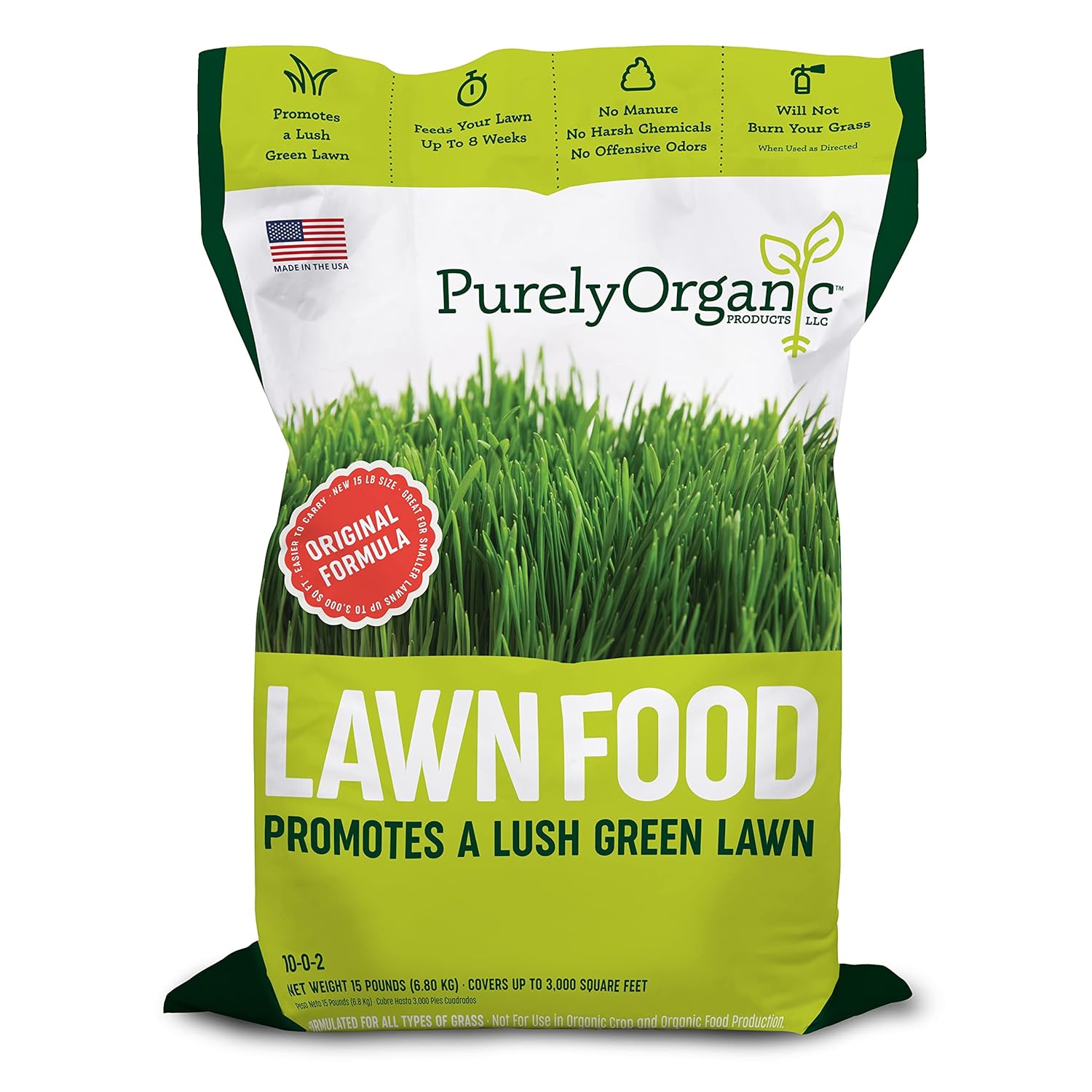
4. Purely Organic Products Lawn Food 10-0-2, 15 lb Bag, Covers 3,000 sq. ft. – Best Organic Pick
PROS
- +Plant-based ingredients, including distillers grains and soybean meal
- +No re-entry restrictions, so kids and pets can use the yard right away
- +Formulated to avoid burning or yellowing when used as directed
- +No added phosphates, which helps meet local runoff regulations
CONS
- −Lower NPK numbers mean slower visible green-up than synthetic blends
- −Grain-based ingredients can carry a faint earthy smell right after applying
SPECIFICATIONS
| NPK Ratio | 10-0-2 |
| Coverage Area | Up to 3,000 sq. ft. |
| Bag Weight | 15 lb |
| Key Ingredients | Soybean meal, distillers dried grains |
| Feeding Window | Up to 8 weeks |
Purely Organic Products Lawn Food is built around plant-based ingredients rather than synthetic salts, using soybean meal and distillers dried grains to feed the soil rather than force-feed the grass. That gentler approach means it’s formulated to not burn or yellow your lawn even if you’re a little heavy-handed with the spreader.
Because it contains no manure, biosolids, or harsh chemicals, there’s no re-entry waiting period, which matters a lot to households with young kids or dogs that use the yard daily. The phosphate-free formula also helps it comply with the growing number of local ordinances that restrict phosphorus in lawn products.
This is the right call for anyone prioritizing a natural, family-safe formula over the fastest possible green-up, and it earns its spot as the most organic-focused pick on this list.
Get the Purely Organic Products Lawn Food at Amazon
5. O.M. Scott and Sons Natural Grass Food, Covers 2,000 sq. ft., 12.72 lbs. – Best for Small Lawns

PROS
- +Budget-friendly, right-sized bag for small to mid-size yards
- +Natural ingredients with no added artificial or pesticide ingredients
- +People and pets can re-enter the yard immediately after applying
- +Feeds for up to 10 weeks and ships in recyclable paper packaging
CONS
- −Smallest coverage area of the lineup at 2,000 sq. ft. per bag
- −Larger properties will need to buy multiple bags to cover the whole yard
SPECIFICATIONS
| Coverage Area | Up to 2,000 sq. ft. |
| Bag Weight | 12.72 lb |
| Formula Type | Natural, no artificial or pesticide ingredients |
| Grass Compatibility | All grass types |
| Feeding Window | Up to 10 weeks |
O.M. Scott and Sons Natural Grass Food is the entry-level option on this list, and it’s an easy recommendation for anyone with a smaller lawn who doesn’t want to commit to a 15,000 sq. ft. bag they’ll never use up. It’s crafted with natural nutrient sources and skips artificial or pest-control ingredients entirely.
Feeding can begin right after application if you water it in, and it continues working for up to 10 weeks, one of the longer feeding windows in this roundup. People and pets are safe to walk on the lawn immediately, which is a nice bonus for smaller yards that see heavy daily use.
It’s best suited to homeowners with modest-sized lots, community gardens, or anyone wanting to test a natural formula before committing to a larger bag; those with sprawling lawns will get more value from Product 1 or Product 4 on this list.
Get the O.M. Scott and Sons Natural Grass Food at Amazon
How to Choose the Best Lawn Food (Granules)
Granular fertilizer is a dry, pellet-form nutrient blend spread across your lawn with a broadcast or drop spreader, and it remains the most common way homeowners feed their turf because it’s easy to store, easy to measure, and forgiving of timing. Picking the right bag comes down to matching the NPK ratio, release speed, and ingredient type to your specific lawn conditions, since a formula built for a Kentucky bluegrass lawn in Ohio won’t necessarily suit a Bermuda lawn in Texas. Getting this match right is what separates a fertilizer that visibly improves your yard from one that just sits on the surface.
NPK Ratio & Nutrient Balance
The three numbers on every bag represent nitrogen, phosphorus, and potassium. Nitrogen drives leaf growth and color, phosphorus supports root and seedling development, and potassium builds overall plant hardiness. Established lawns generally need high nitrogen and low phosphorus, while new seed or sod benefits from a phosphorus boost. Check your soil test results if you have them, since a heavy-phosphorus lawn doesn’t need more of it.
Coverage Area vs. Lawn Size
Bag coverage ranges widely, from around 2,000 sq. ft. up to 15,000 sq. ft. in this roundup alone. Measure your lawn (or pull the square footage from a property listing) before buying, since an undersized bag means uneven feeding and an oversized one means wasted product or over-application, which can burn grass or run off into storm drains.
Release Type: Quick vs. Slow-Release Nitrogen
Quick-release nitrogen greens up a lawn fast but fades within a couple of weeks, while slow-release nitrogen feeds steadily over 6 to 10 weeks with less risk of burning. Many premium formulas blend both for an immediate response plus sustained feeding, which is generally the safer, lower-maintenance choice for most homeowners.
Organic vs. Synthetic Formulation
Synthetic fertilizers tend to act faster and cost less per square foot, while organic, plant-based formulas feed the soil biology and are gentler on pets, kids, and nearby waterways. Neither is objectively better; it’s a trade-off between speed and ingredient preference that only you can weigh for your household.
Application Timing & Grass Type Compatibility
Cool-season grasses like fescue and bluegrass respond best to fall and spring feedings, while warm-season grasses like Bermuda and zoysia are typically fed through late spring and summer. Always check the label to confirm a formula is rated for your grass type before spreading it, since misapplied fertilizer can stress rather than help your lawn.
Fertilizer Safety and Phosphorus Regulations
Because phosphorus runoff is a leading contributor to algae blooms in lakes and rivers, many states and municipalities now restrict or ban phosphorus-containing lawn fertilizers except for new seed or soil-tested deficiencies. The EPA’s guidance on yard nutrient management is a useful starting point if you’re unsure what’s allowed in your area, and it’s part of why several products on this list, including the GreenView and Purely Organic picks, are formulated without added phosphates. Always store unused granules in a sealed, dry container away from children and pets, and sweep any stray granules off driveways or sidewalks back onto the lawn so they don’t wash into storm drains.
How to Use Lawn Food (Granules)
Once you’ve picked the right bag, applying it correctly matters just as much as the formula itself. Follow these steps for even coverage and the best results.
- Mow your lawn a day or two before applying, and clear away any debris, sticks, or heavy thatch so granules can reach the soil.
- Calibrate your spreader to the setting listed on the bag, then walk in straight, slightly overlapping rows to avoid stripes of over- or under-fed grass.
- Water lightly after application unless the label says otherwise, and avoid mowing again for at least 24 to 48 hours to let the fertilizer settle in.
- Set a reminder for your next feeding, typically every 6 to 8 weeks during the growing season, and check a resource like The Andersons’ lawn care program guidance if you’re troubleshooting uneven color or slow results.
Frequently Asked Questions
Q: How often should I apply granular lawn food?
A: Most granular formulas, including the Scotts Turf Builder Lawn Food (#1) and GreenView Lawn Food (#3) on this list, are designed to be reapplied every 6 to 8 weeks during the growing season. The O.M. Scott and Sons Natural Grass Food (#5) stretches a bit further, feeding for up to 10 weeks between applications. Always check your specific bag’s label, since feeding windows can shift based on your climate and grass type.
Q: Is organic lawn food as effective as synthetic fertilizer?
A: Organic options like the Purely Organic Products Lawn Food 10-0-2 (#4) generally work more slowly than synthetic blends because nutrients release as soil microbes break down the plant-based ingredients. They’re just as capable of producing a lush lawn over time, but if you want the fastest visible green-up, a higher-nitrogen synthetic formula like our Best Overall pick will typically show results sooner.
Q: Can I apply lawn food if I have kids or pets that use the yard daily?
A: Yes, but re-entry guidance varies by product. Natural, plant-based formulas like the Purely Organic Products Lawn Food (#4) and O.M. Scott and Sons Natural Grass Food (#5) allow immediate re-entry, while some synthetic products recommend a light watering-in period first. Always check the specific label instructions before letting kids or pets back on a freshly treated lawn.
Q: What does the NPK ratio on the bag actually mean?
A: The three numbers stand for the percentage of nitrogen, phosphorus, and potassium by weight. For example, The Andersons Premium 28-0-12 Fertilizer (#2) is 28% nitrogen, 0% phosphorus, and 12% potassium. Higher nitrogen numbers generally mean faster, greener growth, while potassium supports overall plant resilience.
Q: How do I know how much lawn food to buy for my yard?
A: Measure your lawn’s square footage first, then match it against the coverage listed on the bag. If you have a large property, a high-coverage option like the Scotts Turf Builder Lawn Food (#1), which covers up to 15,000 sq. ft., will be more economical than buying several smaller bags like the O.M. Scott and Sons Natural Grass Food (#5), which is better suited to yards under 2,000 sq. ft.
Final Thoughts
There’s no single best lawn food (granules) for every yard; the right pick depends on your lawn size, grass type, and whether you’d rather prioritize fast results or a gentler, natural formula. Whichever you choose, sticking to a consistent feeding schedule and matching the application rate to your square footage will do more for your lawn’s health than any single ingredient.
For most homeowners with an average to large lawn, the Scotts Turf Builder Lawn Food offers the best balance of coverage and value. If you’d rather feed your soil with plant-based ingredients that are safe for immediate pet and kid re-entry, the Purely Organic Products Lawn Food is the stronger pick for its gentle, family-friendly formula. For more lawn care tips, browse our full guide to seasonal lawn care basics or check out our fertilizer application schedule guide to plan out your feeding calendar for the year.