Looking for the best pressure washers for driveways, decks, siding, and cars? We compared five popular electric and cordless models on power, flow, and everyday usability.
A pressure washer turns hours of scrubbing into minutes of spraying, but “more PSI” doesn’t automatically mean “better clean.” Flow rate (GPM), nozzle selection, portability, and whether the unit runs on a cord or a battery all matter just as much as the pressure number on the box. Whether you’re rinsing mud off a truck, stripping algae from a fence, or prepping a patio for repainting, matching the machine to the job saves both time and water.
Below, we break down five of the best pressure washers on the market today, spanning budget, mid-range, and premium price points, from a corded classic to a battery-powered unit you can use anywhere a hose reaches. Here’s how each one stacks up.
Our Top Picks
| # | Image | Product Name | $$$ |
|---|---|---|---|
| 1 |  |
Sun Joe SPX3000 Electric Washer | |
| 2 |  |
Westinghouse WPX3000e | |
| 3 |  |
Westinghouse ePX3100 | |
| 4 | 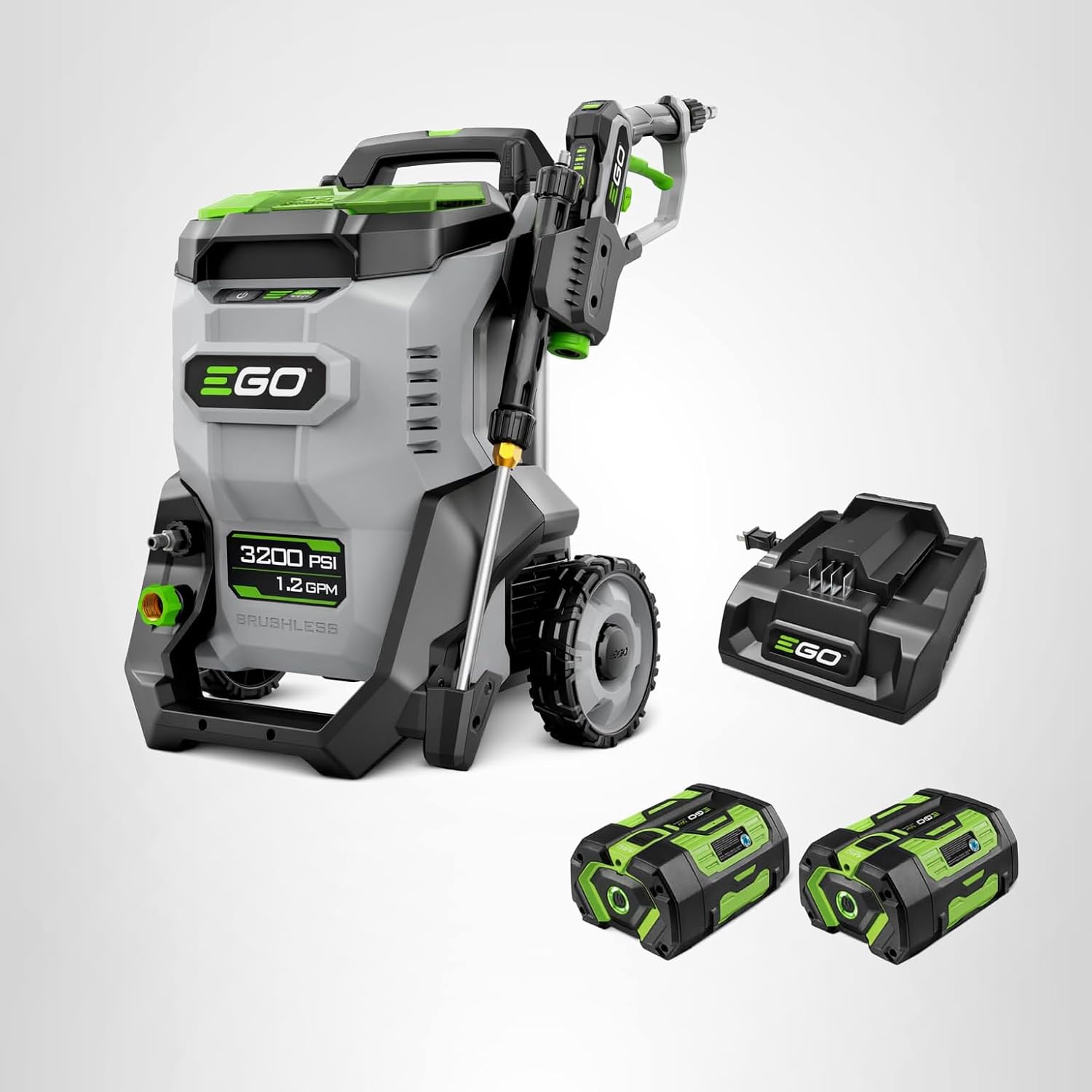 |
EGO Power+ HPW3204-2 Cordless | |
| 5 |  |
LWQ Foam Cannon Washer |
5 Best Pressure Washers Review
1. Sun Joe SPX3000 14.5-Amp Electric Pressure Washer – Best Overall
PROS
- +Dual detergent tanks let you switch cleaners without refilling
- +Five quick-connect nozzles cover pinpoint jets to wide fan sprays
- +Backed by a full 2-year manufacturer warranty
- +Total Stop System shuts the pump off automatically to save wear
CONS
- −20-foot hose is on the shorter side for large driveways
- −Universal motor runs louder than induction-motor rivals
SPECIFICATIONS
| Max Pressure | 2030 PSI |
| Max Flow Rate | 1.76 GPM |
| Motor | 14.5-Amp electric |
| Hose / Cord Length | 20 ft hose / 35 ft GFCI cord |
| Included Nozzles | 5 (0°, 15°, 25°, 40°, soap) |
The SPX3000 has been a bestseller for years, and it earns that reputation with a straightforward feature set: a strong 14.5-amp motor, a dual detergent tank so you never mix soaps by accident, and five nozzles that swap in seconds.
In everyday use, it handles muddy driveways, algae-streaked decks, and grimy patio furniture without much fuss, and the Total Stop System keeps the pump from running idle between trigger pulls, which helps it last longer.
It’s the right pick for most homeowners who want one machine that does everything reasonably well, at a price that doesn’t stretch the budget.
Get the Sun Joe SPX3000 at Amazon
2. Westinghouse WPX3000e Electric Pressure Washer – Most Powerful Corded Option
PROS
- +3000 max PSI handles tougher stains and heavier equipment
- +Never-flat 10-inch wheels roll easily over gravel and grass
- +3-year limited manufacturer warranty
- +M22 fittings support foam cannons and surface cleaner attachments
CONS
- −Heavier hand-truck build at roughly 37 lbs
- −Bulkier footprint takes up more storage space
SPECIFICATIONS
| Max Pressure | 3000 PSI |
| Max Flow Rate | 1.76 GPM |
| Motor | 120V AC electric motor, 13-amp |
| Hose / Cord Length | 25 ft hose / 35 ft GFCI cord |
| Included Nozzles | 5 (0°, 15°, 25°, turbo, soap) |
The WPX3000e steps up the pressure to 3000 max PSI while keeping the same 1.76 GPM flow as the Sun Joe, giving it more raw scrubbing force for baked-on grime.
Its axial cam pump and heavy-duty AC motor are built for repeated use, and the never-flat wheels make it easy to haul across a yard or up a driveway slope without worrying about flats.
Choose this one if you regularly deal with stubborn stains on brick, concrete, or aluminum siding and don’t mind a slightly bulkier machine in exchange for more headroom.
Get the Westinghouse WPX3000e at Amazon
3. Westinghouse ePX3100 Electric Pressure Washer – Best for Beginners
PROS
- +Only 16.5 inches tall and 19 lbs, easy for one person to store
- +Four-wheel, 360° anti-tipping base for a low center of gravity
- +2300 PSI is plenty for cars, fences, and patios
- +Simple one-switch operation, straightforward for first-time users
CONS
- −Single onboard soap tank instead of a dual-tank system
- −Less pressure headroom than the WPX3000e for heavy-duty jobs
SPECIFICATIONS
| Max Pressure | 2300 PSI |
| Max Flow Rate | 1.76 GPM |
| Motor | 13-amp axial cam pump |
| Weight / Height | 19 lbs / 16.5 in tall |
| Included Nozzles | 5 (0°, 15°, 25°, turbo, soap) |
The ePX3100 was designed around one idea: make a pressure washer that’s easy to live with. Its low, wide, anti-tipping base keeps it stable even on uneven pavement, and four quick-lock wheels let it turn in place.
At 19 pounds it’s genuinely easy to carry up steps or lift into a car trunk, and the one-switch operation removes any guesswork for someone who has never used a pressure washer before.
If you want a no-drama unit for occasional car washes, deck cleanups, and driveway touch-ups, this compact model is an easy recommendation.
Get the Westinghouse ePX3100 at Amazon
4. EGO Power+ HPW3204-2 Cordless Pressure Washer – Best Premium Option
PROS
- +No cord or garden hose required, thanks to the included siphon hose
- +3200 PSI with ECO, High, and Turbo modes plus a battery display
- +Up to 60 minutes of runtime with two included 6.0Ah batteries
- +5-year tool warranty and 3-year battery warranty
CONS
- −Highest price on this list by a wide margin
- −Runtime is limited compared to a corded machine for big jobs
SPECIFICATIONS
| Max Pressure | 3200 PSI |
| Max Flow Rate | Up to 2.0 GPM (1.2 GPM rated) |
| Power Source | Two 56V ARC Lithium batteries (included) |
| Runtime | Up to 60 minutes per charge |
| Hose Length | 25 ft high-pressure hose |
The HPW3204-2 breaks from the pack by ditching the cord entirely. Its Peak Power feature pairs two 56V batteries to push out 3200 PSI, matching or beating most corded machines.
The wand-mounted display shows battery life and lets you toggle between ECO, High, and Turbo modes, and the included siphon hose means you can draw straight from a bucket or rain barrel when there’s no spigot nearby.
It’s the strongest match for anyone who wants to wash a boat, camper, or detached shed far from an outlet, and who doesn’t mind paying a premium for that freedom.
Get the EGO Power+ HPW3204-2 at Amazon
5. LWQ Electric Pressure Washer with Foam Cannon – Best Budget Pick
PROS
- +Most affordable option on this list
- +Included foam cannon lathers cars and patio furniture generously
- +Anti-tipping base and dual rollers for easy, stable movement
- +Compact and lightweight, easy to lift and tuck away
CONS
- −Independent lab testing has found actual working pressure well below the advertised max PSI
- −Fewer nozzles (4) and no premium build materials
SPECIFICATIONS
| Advertised Max Pressure | Up to 4200 PSI (manufacturer listing) |
| Max Flow Rate | Up to 2.5 GPM |
| Included Nozzles | 4 (0°, 15°, 25°, 40°) plus foam cannon |
| Power Cord | 34.5 ft |
| Design | Dual rollers, anti-tipping base, faucet/bucket intake |
This entry-level LWQ model is built for occasional, lighter-duty cleaning rather than industrial-strength jobs. Its rated flow of up to 2.5 GPM is actually higher than every corded model on this list, which helps it rinse away soap and loose dirt quickly.
The included foam cannon is a genuine highlight, producing thick suds for car washing and outdoor furniture, and independent testing labs have measured its real-world pressure output as noticeably more modest than the number printed on the box, which is common at this price tier.
If your projects are mostly light dirt, mud, and soap-and-rinse jobs rather than years of caked-on grime, this budget pick will get the job done for a fraction of the cost of the other machines here.
Get the LWQ Electric Pressure Washer at Amazon
How to Choose the Best Pressure Washers for Your Home
A pressure washer uses an electric or gas-driven pump to force water through a narrow nozzle at high speed, stripping away dirt, mildew, and grime that a garden hose can’t touch. Homeowners use them on driveways, decks, siding, fences, and vehicles, while contractors rely on larger units for commercial jobs. Picking the right one means balancing pressure, flow, portability, and the surfaces you’ll actually be cleaning, since an oversized unit can damage soft wood or vehicle paint just as easily as an undersized one fails to cut through grease. Comparing specs side by side, as we did above, is the fastest way to land on one of the best pressure washers for your specific setup.
PSI (Pounds Per Square Inch)
PSI measures how forcefully water leaves the nozzle. Light jobs like cars and screens usually need 1,300–1,900 PSI, general home use falls around 2,000–2,800 PSI, and tougher concrete or masonry cleaning benefits from 2,800 PSI and above. Going too high on a delicate surface can gouge wood or strip paint, so match the rating to your typical task rather than chasing the highest number available.
GPM (Gallons Per Minute)
Flow rate determines how quickly dirt and soap actually rinse away, and it matters just as much as pressure. Two machines with the same PSI but different GPM will clean at noticeably different speeds, since higher flow moves more debris off the surface per pass. Multiply PSI by GPM to get a rough “cleaning units” figure that some manufacturers list, which is a handy way to compare models at a glance.
Power Source: Corded, Gas, or Battery
Corded electric units are quiet, need no fuel, and suit most residential jobs within reach of an outlet. Gas models deliver more sustained power for large properties but are heavier and louder. Battery-powered washers trade some runtime for total portability, letting you clean far from any outlet or hose bib as long as you have spare batteries charged.
Nozzles and Accessories
Interchangeable nozzles let one machine handle multiple jobs, from a pinpoint 0° jet for stripping paint to a wide 40° fan for gentle rinsing. A dedicated soap nozzle or onboard detergent tank makes pre-treating grease and mildew far easier, and add-ons like foam cannons or surface cleaners extend what the washer can do without buying a second unit.
Portability and Storage
Weight, wheel size, and cord/hose length decide how easily you can move a pressure washer around a property and tuck it away afterward. A lightweight unit with a long hose is easier to maneuver around a car or up a flight of steps, while heavier hand-truck designs with larger wheels handle rougher terrain and bigger properties more comfortably.
Pressure Washer Safety and Certification Standards
Because a high-pressure stream can cut skin and cause serious injury at close range, it’s worth treating a pressure washer with the same respect as any power tool. Manufacturers that submit units for independent verification typically reference the Pressure Washer Manufacturers Association’s testing protocols, which standardize how PSI and GPM figures are measured so shoppers can compare models on a level playing field. Before your first use, check that hoses and fittings are securely connected, keep the spray wand pointed away from people and pets, and never run the pump dry, since operating without water can damage the seals within minutes. For a deeper dive into keeping outdoor equipment running safely all season, our home maintenance guides cover more general upkeep tips worth bookmarking.
How to Use a Pressure Washer
Getting good results comes down to a predictable routine rather than trial and error. Follow these steps for a safe, effective first run:
- Connect the garden hose to the inlet, attach the high-pressure hose and wand, and select the nozzle appropriate for the surface (wide fan for delicate materials, narrow jet for concrete).
- Turn on the water supply first, purge air from the lines by squeezing the trigger before starting the motor, then power on the unit and begin at a moderate distance from the surface.
- Work in overlapping passes, keeping the nozzle moving to avoid etching one spot, and switch to the soap nozzle to pre-treat heavier grime before rinsing it away.
- After use, shut off the water and motor, relieve remaining pressure by pulling the trigger, and coil the hose loosely for storage. If output pressure suddenly drops mid-job, check the inlet filter for debris, a common culprit outlined in the CSA Group’s product safety resources for electric appliances. For more seasonal cleaning walkthroughs, browse our outdoor cleaning tips for step-by-step project ideas.
Frequently Asked Questions
Q: What PSI do I actually need for a driveway?
A: Most concrete driveways clean up well between 2,500 and 3,000 PSI. The Westinghouse WPX3000e (#2 on our list) tops out at 3000 PSI and handles baked-on tire marks and oil stains comfortably. If your driveway is mostly loose dirt and light staining, the Sun Joe SPX3000 (#1) at 2030 PSI will usually be enough, and its wider nozzle options make it easy to dial back pressure on stamped or decorative concrete.
Q: Can a pressure washer damage my car’s paint?
A: Yes, if you use too narrow a nozzle too close to the surface. For vehicles, stick to a 25° or 40° nozzle and keep the wand at least a couple of feet away. The Westinghouse ePX3100 (#3) and the LWQ model (#5) both come with wider-angle tips and a soap nozzle, which make them easier to use safely on paint and trim than a machine set up mainly for concrete.
Q: Is a cordless pressure washer worth the extra cost?
A: It depends on where you’re cleaning. The EGO Power+ HPW3204-2 (#4) is the only battery-powered model here, and its ability to run without a cord or nearby hose bib is genuinely useful for boats, campers, or detached structures. For most driveway and patio jobs near an outlet, a corded unit like the SPX3000 or WPX3000e delivers similar performance for less money.
Q: How long does a typical electric pressure washer last?
A: With regular maintenance, a quality electric unit can last 5–10 years. Features like the Total Stop System on the Sun Joe SPX3000 (#1) reduce pump wear by shutting off automatically between trigger pulls, and sticking to the manufacturer’s recommended detergents helps avoid clogging the pump or nozzles over time.
Q: What’s the difference between rated and max PSI/GPM?
A: Max figures represent peak output under ideal conditions, often measured at the instant the trigger is pulled, while rated figures reflect sustained performance during normal use. This gap can be sizable on lower-cost units; the LWQ washer (#5), for example, advertises a high max PSI, but real-world testing has shown its sustained output running well under that figure, which is worth keeping in mind when comparing specs across brands.
Final Thoughts
There’s no single “best” pressure washer for every household — the right choice depends on how much pressure and flow your typical jobs call for, whether you need to work away from an outlet, and how much storage space you have. Weigh PSI and GPM together, check that the included nozzles match your surfaces, and don’t overlook portability if you’ll be hauling the unit around a large yard.
For most buyers, the Sun Joe SPX3000 offers the best balance of performance and value for everyday cleaning. If you need to work untethered from outlets and hoses, the EGO Power+ HPW3204-2 is the stronger pick for its cordless freedom and industry-leading warranty.